“Some lives rise not because the path was easy, but because the will to walk it never broke.”
Introduction
The story of Dr. Vishwanath B. Nath is the story of a man who grew up with nothing but courage, discipline, and an unshakable belief that education could become the ladder to a better life. Born on 11th January 1967 in Manwat, District Parbhani, his journey began in an environment where survival itself was a daily challenge. Yet, through every hardship, every barrier, and every uncertain moment, he carried within him a quiet fire—a fire that refused to let poverty decide the limits of his future.
Raised in the small village of Singnapur, he lived with his family in an 8×10 grass hut, a space barely large enough to sleep, yet filled with the warmth and determination of his parents, Babunath Vittalnath Nath and Shantabhai Babunath Nath. Their income, around 200–300 rupees a month, could hardly sustain them, but what they lacked in finances, they compensated with values, love, and a profound belief that their son was destined for more. His parents believe in the existence of the God, their Kulswami is Lord Jyotiba and Kulswamini is Aai Tuljabhavani, they always prey for their childs. His parents had only one dream—to see him study well, become an officer, and live a life filled with dignity. That dream became the foundation upon which every chapter of his life would be built.
As a child, Vishwanath witnessed struggle not as an occasional visitor but as a constant presence. When his father met with a tragic accident at the flour mill and lost the ability to walk, the weight of the household fell entirely on his mother. She worked tirelessly on farms, carrying the burden of three children with unwavering strength. This phase shaped his earliest understanding of responsibility and sacrifice. It was in those moments—watching his mother battle life alone—that he silently promised himself he would rise, not just for his dreams, but for her hardships.
His primary schooling began in a small village Singnapur of district Parbhani of Maharashtra but the village offered limited educational opportunities. Recognizing his potential, his maternal mother Smt. Bhagirathibai and Brother Gopinath brought him to Manwat, where he continued his education. Even there, poverty remained a stubborn companion. Many mornings began without food, and like others from the Nath Jogi community, he went house-to-house collecting whatever little could be shared. Yet, amidst these struggles, one thing never changed—his brilliance. Year after year, from second standard to the tenth, he secured the first rank in his class.
His school became the first place where people outside his home recognized his exceptional ability. Teachers like Mr. Deshpande, Mr. Yelmate, Mr. Nevrekar, and Mr. Panchal became guiding lights. They not only encouraged him academically but supported him emotionally, financially, and morally. They allowed him to sell small snacks in school to earn money for his education, understanding that talent should not be lost to poverty. Their belief in him planted the earliest seeds of confidence that he was meant for something far bigger than his circumstances.
“Some children grow up with toys and comfort; others grow up with struggle and silence. But it is the second kind who often learn the strongest lessons.”
Phase 1: Roots of Resilience – A Humble Beginning
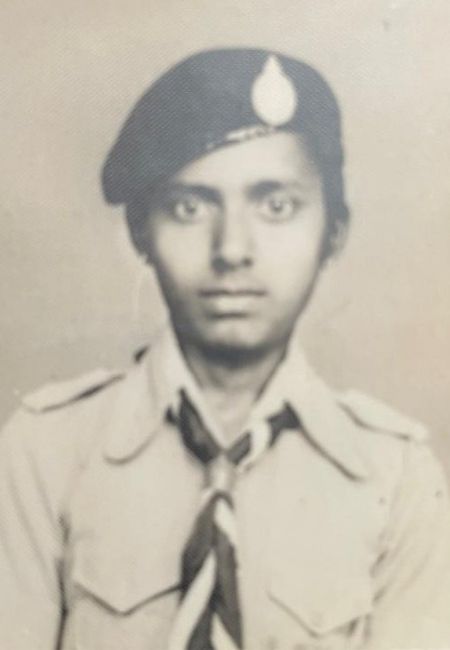
The life of Dr. Vishwanath B. Nath began far away from the noise of cities, in a quiet corner of Maharashtra, where simplicity was not a choice but a way of life. Born on 11th January 1967 in Manwat, District Parbhani, he entered a world where life offered very little—but it offered him something more powerful than comfort: the raw strength that only hardship can teach. His family belonged to the Nath Jogi (Nath Panthi) community, known for its resilience and deep sense of hope. Even as a child, he carried those values like an invisible shield.
His parents, Babunath Vittalnath Nath and Shantabhai Babunath Nath, lived a life that could only be described as survival. Their home was not a proper house but an 8×10 feet small grass hut cemented with soil mud—a small hut with barely enough space to sleep, cook, and dream. Yet, inside this tiny space resided the warmth of a family determined to stay together despite the world’s indifference. Poverty was not an event for them; it was a constant presence, shaping their days and nights.
His father worked at a local flour mill, earning a wage that today would not even buy a few cups of tea—about 200 to 300 rupees a month. His mother worked on other people’s farms, doing labor-intensive work under the scorching sun. Their earnings were barely enough to feed their children, but they never let hunger steal their dignity. They lived with humility and an unshakeable belief that education was the only path through which their son could rise beyond the life they lived.
Even before understanding the world, Vishwanath was introduced to its harsh realities. His parents struggled for every rupee, every meal, every day. But instead of breaking, they chose to hope. As they watched other children study and find opportunities, they silently carved a dream for their son. They wanted him to study well, become an officer, and build the life they could never afford for themselves. For them, his education was more important than anything else. They were willing to work harder, sacrifice more, and withstand more pain just to give him a chance at a better future.
“Some children learn lessons from books. Others learn from hunger, hardship, and hope—and those lessons stay for life.”
Phase 2: From Struggle to Strength – Schooling and Early Lessons
The second phase of Dr. Vishwanath B. Nath’s life unfolds in Manwat, where his childhood began shaping into something larger than circumstance. After completing his first year of schooling in the small village of Singnapur, his maternal brother —his Mama—brought him to Manwat. This decision, made by a man who himself had very little, became one of the most defining turning points in his young life. It was not just a change of location; it was a shift toward possibility.
His Mama was also a poor man, living in a modest household that could hardly support an additional child, but poverty did not dim his compassion; he saw in young Vishwanath a seriousness, a clarity, and a spark beyond his age, and he believed that the boy deserved a chance to study in a better school— a belief that allowed Vishwanath to step into Manwat, a town that became the backdrop for some of the hardest yet most transformative years of his life.
Though the environment in Manwat was more structured than Singnapur, the struggle did not lessen— in fact, it deepened in new ways. His family background remained painfully unchanged; his father Babunath Vittalnath Nath still carried the consequences of his mill accident, unable to walk and unable to earn, while his mother Shantabhai Babunath Nath continued working on farms, doing physically demanding work to support the household. With three children to feed and rising expenses, she fought every day against circumstances that refused to ease.
In Manwat, Vishwanath lived in his maternal grandparents’ home, but resources were scant and food was uncertain, making survival a skill he had to learn early. Like others from the Nath Jogi community, he often went house-to-house in the mornings, receiving small amounts of food—whatever people could spare. It was not something he felt ashamed of; it was a necessity, a way of life for families like his. The painful part was not the act of going door to door, but the knowledge that his parents were struggling miles away, and he could do nothing to help them except study and succeed.
“Life does not change in a single moment—yet one brave decision can change the direction of a lifetime.”
Phase 3: The Leap of Faith – Embracing Education
Phase 3 in the life of Dr. Vishwanath B. Nath marks the moment when a young boy, shaped by poverty and resilience, began stepping toward a future he never dared to imagine; it was a phase where destiny stood at a crossroads—where a single choice, supported by the right people, shifted him from the struggles of survival toward the promise of education and opportunity, a period between finishing school and entering the world of technical education, filled with doubt, fear, support, and transformation.
After completing his tenth standard in 1984 with excellent marks, Vishwanath found himself in a situation that many children from poor families face. He had done everything right—studied sincerely, ranked first every year, made his teachers proud, and proved his brilliance beyond question. Yet, the next step in his life was not clear. The question was simple: What comes after the 10th? But for a boy coming from an 8×10 small hut with no exposure to careers, no financial support, and no guidance at home, this question felt overwhelming.
His principal, Mr. Sikhawal, deeply impressed by his sincerity and performance, offered him a job as a teaching assistant in the same school. The intention behind the offer was kind and practical. The principal knew that Vishwanath’s family desperately needed money. By working as a teacher, he could earn a small income, support his home, and perhaps continue living a life of stability—even if modest. It was a safe path, a respectable path, and a path that poverty often forces children to accept.
Among all his teachers, one man stood out as the voice that changed his destiny—Mr. Deshpande. He was not just a teacher; he was a visionary who recognized the greatness hidden inside the boy. While everyone else was thinking of his immediate needs, Mr. Deshpande was thinking of his long-term potential. He did not want the boy’s future to be limited by his circumstances.
Note of Thanks
Dr. Vishwanath B. Nath extends his heartfelt gratitude to all those who have shaped his journey, guided his steps, and supported him through challenges both personal and professional. Foremost, he is deeply thankful to his parents, Babunath Vittalnath Nath and Shantabhai Babunath Nath, whose sacrifices, unwavering faith, and belief in the power of education laid the foundation for his life. Their courage in the face of adversity instilled in him the values of resilience, integrity, and perseverance that have guided every stage of his journey.
He also expresses sincere appreciation to his mentors and teachers, including Mr. Sikhawal, Mr. Deshpande, Mr. Yelmate, Mr. Nevrekar, Mr. Bande, and Mr. Panchal, who recognized his potential early and provided guidance, encouragement, and practical support that enabled him to overcome obstacles and excel academically. Their mentorship was instrumental in transforming his dreams into achievable goals.
Dr. Vishwanath is especially grateful to his wife, Swapnaja Nath, whose patience, support, and dedication have been a pillar of strength throughout his career, particularly during periods of intense professional responsibility. He acknowledges his daughters, Neha, Nikita, Mangesh, Abhijeet and Tejaswini, for their love, understanding, and, in Nikita’s extraordinary case, life-saving generosity. Their support has allowed him to focus on public service with peace of mind and determination.
He also thanks his lifelong friends, Mr. Govind Karwa, Mr. Kamaji Dhadke, and Mr. Ram Panchar, who have stood by him through every stage, offering encouragement and unwavering companionship. Finally, he extends his gratitude to colleagues, officers, and communities across Maharashtra whose collaboration and trust enabled the successful completion of numerous projects.
He specially thanks to Mr. Ghori, Mr. S. P. Khillare, Mr. Baliramji Khillare and Mr. Sakharamji Gaikwad for their loving remarkable support to him and his family as well.
This biography is not just a record of achievements; it is a tribute to every person who contributed to Dr. Vishwanath B. Nath’s life, illustrating the power of guidance, support, and shared commitment in shaping a meaningful and impactful journey.
Thank You
Dr. Vishwanath B. Nath