
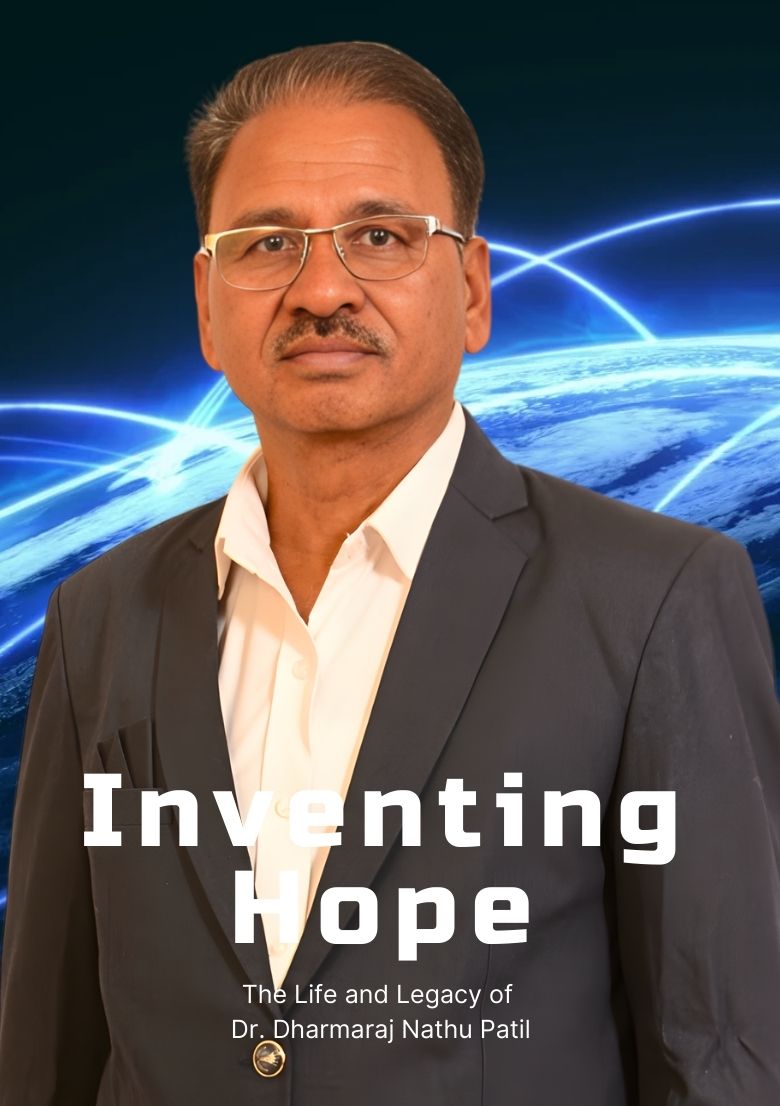
“If you can look at a problem and still believe that you can improve it, you are already halfway to innovation.”
Introduction
The life of Dr. Dharmaraj Nathu Patil stands as a powerful reflection of how perseverance, simplicity, and innovation can coexist within one remarkable individual. Born on 1st June 1965, in a humble village of Anakwadi, Dhule district, Maharashtra, to a hardworking father, he began his journey amidst modest surroundings but with an unshakable belief in hard work and self-reliance. His childhood was marked by profound lessons in resilience—lessons taught not through luxury or leisure, but through loss, responsibility, and the quiet strength of his father.
When Dr. Patil lost his mother, Damotabai Natha Patil, in 1970 at a very tender age, the family’s life changed overnight. His father, Natha Vanji Patil, who worked as a daily labourer, refused to remarry and took it upon himself to raise his son with values rooted in discipline and compassion. It was from him that young Dharmaraj learned that dignity and honesty are not just virtues—they are the very tools through which one crafts a meaningful life. The absence of a mother became a deep space filled with yearning, but also a powerful motivator that pushed him toward self-dependence.
Growing up in a rural backdrop, Dr. Patil walked long distances to attend school, often skipping small joys like picnics or outings because the family could not afford them. He fondly remembers visiting his elder sister, Vimal, during every festival—enjoying sweets at her home and bringing some back for his father, a small act that reflected love and gratitude even in scarcity. Yet, he never viewed poverty as a punishment; rather, he treated it as an early teacher that shaped his discipline. His father’s words—simple, sincere, and wise—became his guiding compass: “Education will never betray you. He often recalls his childhood picnic at Verula Ajanta, where he went to cut grass in the forest to attend the picnic but could not go as the reservation was full. The dream of the future he had while cutting grass was very small, but today he says that God has given him something beyond limits – an early spark of imagination that one day sealed his destiny. Two kind souls, Bhavrao Dada and Jagannath Kaka, saw potential in the young boy and encouraged his family to continue his education after the tenth standard. He went on to complete his SSC in March 1983 with an impressive 70%, securing the second rank, a milestone that filled his small home with pride. While many might have been content with that achievement, Dr. Patil was already looking beyond—toward a life of practical learning. He decided to pursue Industrial Training (ITI), a field that matched his love for hands-on problem-solving. In 1985, he successfully completed his course and began his apprenticeship at GG Dandekar Company in Bhiwandi, followed by clearing the BTRI examination. This was the period that refined his technical instincts and gave him the discipline that would later become the foundation of his entrepreneurial and inventive journey.
While many might have been content with that achievement, Dr. Patil was already looking beyond—toward a life of practical learning. He decided to pursue Industrial Training (ITI), a field that matched his love for hands-on problem-solving. He completed his ITI Electrician course in 1985 and then went on to complete his National Apprenticeship in 1987 at G.G. Dandekar Company, Bhiwandi. He began his career the same year as a Wireman at Visva Bharati Spinning Mill, Bhiwandi, followed by clearing the BTRI examination. This was the period that refined his technical instincts and gave him the discipline that would later become the foundation of his entrepreneurial and inventive journey.
“Greatness does not start with privilege; it starts with purpose.”
Phase 1 : The Soil of Beginnings
The life of Dr. Dharmaraj Nathu Patil began in a small village named Anakwadi in Dhule district, Maharashtra, where the mornings were filled with the hum of farmers heading to their fields, and the evenings carried the sound of prayer bells echoing across the quiet lanes. It was on 1st June 1965 that he opened his eyes to a world that, though simple and modest, brimmed with unseen possibilities. From those very first days, life began to shape him through both tenderness and tests.
His father, Natha Vanji Patil, a hardworking labourer, was a man of quiet strength—someone who believed that a person’s true worth lay not in wealth, but in character. His mother, Damotabai Natha Patil, was a woman of warmth and devotion, who balanced her family’s humble means with grace. The home they created was small but alive with affection and the values of honesty, kindness, and hard work. Yet, life is not always generous to good people. When Dr. Patil was just about four years old, in 1970, his mother passed away, leaving a void that would echo in his heart for the rest of his life.
That loss, though deeply painful, became the earliest lesson of endurance in his young life. His father’s choice not to remarry was not made from pride, but from love—a determination to raise his only son with the same tenderness that both parents would have offered together. The villagers often admired this decision; they saw in Natha Vanji Patil not just a widower, but a man of rare integrity. He would wake before dawn, complete his fieldwork, and then spend time teaching his son the importance of sincerity and respect for labor.
The young Dharmaraj grew up in this atmosphere of quiet determination. He often sat outside their small house watching his father repair farm tools, listening to the rhythmic clang of metal on metal. That sound became the music of his childhood—perhaps the earliest spark that later connected him to machines, design, and innovation. Despite the hardships of village life, Dr. Patil never saw himself as poor. He saw himself as prepared. His father’s simplicity became his greatest form of wealth.
“When destiny gives you challenges, it is only testing how deeply you believe in your dreams.”
Phase 2 : The Path of Perseverance
After completing his schooling with commendable results, Dr. Dharmaraj Nathu Patil stood at the crossroads of youth—a stage in life where most young men dream of comfort, yet he dreamt of competence. Having passed his SSC with 70% marks and securing second rank, he had proven not only his academic ability but also his determination to rise above circumstance. Yet, success at that time did not open doors easily. Financial limitations continued to define the family’s boundaries, and each next step required courage as much as clarity.
His father, Natha Vanji Patil, still carried the same steadfast belief that education was a tool of liberation. He knew that his son’s mind was his greatest asset. But with limited resources and rising expenses, continuing education meant sacrifice. Despite the difficulty, the elder Patil never hesitated. “You will study,” he told his son firmly. “Knowledge is the only inheritance I can give you.” Those words became the foundation upon which Dr. Patil would build the rest of his life.
While many of his peers turned to short-term jobs or manual labor, Dharmaraj wanted to learn something that combined both mind and hand. His natural curiosity about how machines worked guided his choice to pursue Industrial Training. He applied for the Industrial Training Institute (ITI) course, believing that technical education would help him understand the science behind the everyday machines that powered the world. That decision marked the true beginning of his journey toward invention and entrepreneurship.
The early days of his ITI training were not easy. Living away from home in a new environment tested his independence. He came from a background of scarcity, so he managed his daily expenses with precision—every rupee mattered. There were days when he skipped meals to save money for books and tools. But even hunger did not deter him. In fact, those moments of discomfort only made him more disciplined. His classmates often admired his patience and calm demeanor; he was known for staying late after class to practice wiring, assembling, or dismantling equipment, curious to know how each part served the whole.
The instructors at the institute soon noticed his sincerity. Dr. Patil was not one to rush through lessons; he wanted to understand why things worked the way they did. His ability to connect theory to practice set him apart from others. If a motor failed, he would not just replace it—he would find the root cause, analyze the damage, and suggest preventive improvements. His mind was not only learning; it was already beginning to innovate.
Upon completing his ITI course in 1985, Dharmaraj was determined to test his skills in the real world. His performance during the training earned him an apprenticeship opportunity at GG Dandekar Company in Bhiwandi, a well-known name in machinery manufacturing. It was his first exposure to a professional industrial environment—a place where ideas met execution, and where the discipline of engineering merged with the rhythm of production.
“When you begin to work not just for yourself, but for those who depend on you, effort becomes purpose.”
Phase 3 : Building Through Responsibility
The closing years of the 1980s marked a defining transition in the life of Dr. Dharmaraj Nathu Patil. Having earned valuable technical experience and professional discipline during his early working years, he now stood on the threshold of adulthood—a period where his responsibilities would deepen and his dreams would take clearer shape. The decade ahead was destined to test both his endurance and his faith. It would transform the young technician into a family man, a problem-solver, and a quiet dreamer who learned how to balance duty with aspiration.
After the closure of Visva-Bharati, where he had first learned the rhythm of the industrial world, Dr. Patil took on a new role in 1995 as a Supervisor at Radhika Polyester. The shift was more than just a change in job; it was a change in outlook. He had already learned how to work with precision and dedication, but now he was learning how to lead. As a supervisor, he had to coordinate with multiple teams, handle breakdowns under pressure, and ensure that production schedules were never compromised. Each day was an exercise in patience, leadership, and presence of mind.
Though his work demanded long hours and attention to detail, he found strength in his sense of purpose. He knew that every bit of effort he put in would eventually shape a better future for himself and his family. Around this time, another significant chapter of his life began—his marriage to Sunanda, a kind-hearted and talented woman whose quiet determination complemented his own. They were married on 19 April 1990. Their union was not just a partnership of love but of shared resilience.
Sunanda came from a background where hard work was a way of life. She was a gifted tailor, known in her neighborhood for her skill and creativity. Her talent soon became an important support for the family, both emotionally and financially. She understood Dr. Patil’s ambitions and stood beside him through every uncertainty. Their early days of marriage were simple yet filled with hope. They lived modestly, saving every possible rupee, planning every expenditure carefully, and dreaming together of a stable life built on honesty and effort.
Not long after their marriage, the couple welcomed their first child, Supriya (born 5 June 1991). Her birth brought immense joy and renewed determination into Dr. Patil’s life. He often recalled that holding his daughter for the first time filled him with a new kind of responsibility—one that made him view the world differently. He began to measure success not in numbers or titles but in security, care, and the comfort he could provide his loved ones. Two years later, on 9 August 1993, their son Chetan was born, completing the small yet strong circle of his family.
As his family grew, so did the weight of responsibility. There were moments when financial strain tested his patience, but Dr. Patil never allowed despair to take root. During those years, his wife’s tailoring work became a lifeline. He deeply respected her for her strength and contribution, often saying that she “stitched more than clothes—she stitched the fabric of our dreams.” They were a team, united not by luxury but by love and mutual understanding.
Note of Thanks
In closing the story of Dr. Dharmaraj Nathu Patil, it becomes clear that no life of meaning is built alone. Every invention, every success, and every milestone in his journey carries the imprint of many hearts that believed in him, stood by him, and walked with him.
Dr. Patil extends his heartfelt gratitude to his father, Natha Vanji Patil, whose honesty and hard work shaped the foundation of his values, and to his late mother, Damotabai, whose blessings continue to guide him silently. He bows in eternal remembrance to his beloved wife, Sunanda, whose unwavering faith and quiet strength became his lifelong inspiration. Her memory remains the light behind every creation and every act of perseverance.
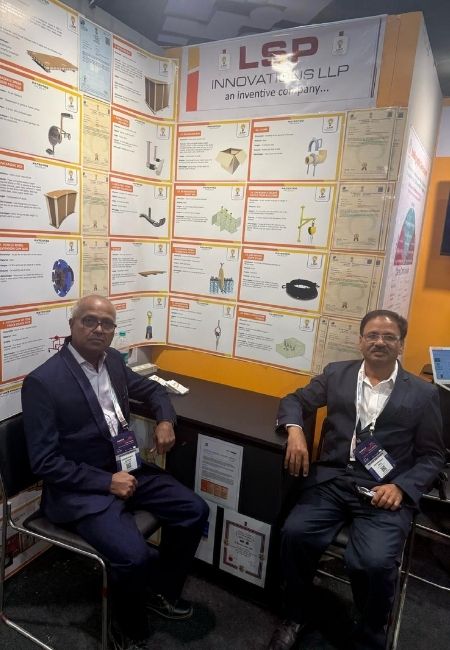
He expresses deep appreciation to his son, Chetan, whose support, technical expertise, and shared vision turned many ideas into reality. Their bond—of trust, discipline, and purpose—became the true engine behind LSP Innovations LLP. To his daughter Supriya, he remains thankful for her encouragement, care, and the steady warmth she brings to the family’s strength.
Dr. Patil also acknowledges that his success would not have been possible without the help and blessings of his father, Guruji, both the angels, his sisters, brother-in-law, wife, son and daughter, daughter-in-law, and Thorat, Jadhav, Thakare, R. N. Shah, Itagikar, Mane, Santosh, Chaudhary, Maruti Pawar, Pillai, S. Joshi, all Rotarians, Khalapurkar, Pingle, Ashpakbhai, Aslambhai, Jambhale, and many other relatives and friends who have stood by him through every phase of his journey.
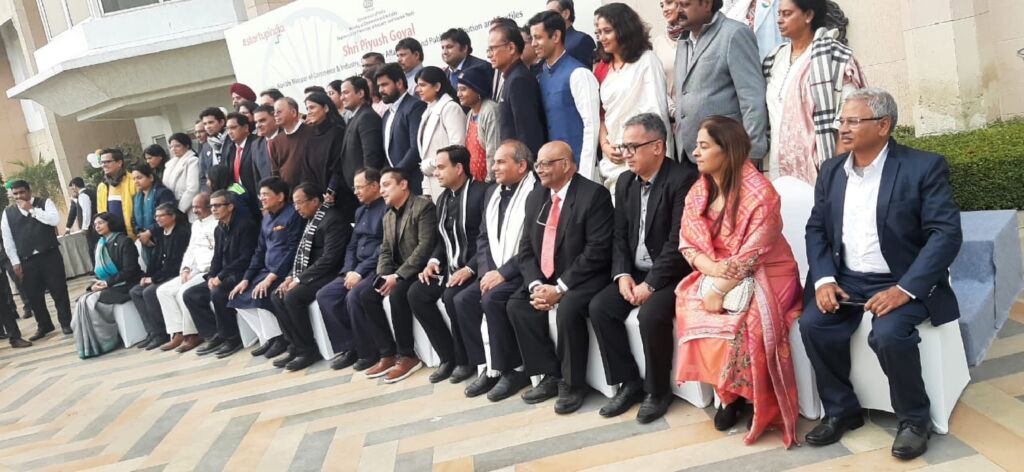
He also extends sincere thanks to his colleagues at Laghu Udyog Bharati, his friends from the Rotary Club of Khopoli, and every individual who believed in his dream of innovation for all. He remains deeply grateful to the Government of India and the Ministry of Commerce for recognizing and encouraging self-taught innovators like him.
Thank you
Dr. Dharmaraj Nathu Patil