“Two colours stands opposite to each other, black and white. And they both are in my eyes. Through both I can see positivity and negativity Alhamduillah Shukranillah”.
Introduction
Dr. Mubarika M. Kheda’s life story is one of resilience, self-discovery, and transformative growth. Born in Dawoodi Bohra community of Shia Muslims in the small town of Salumbar, Rajasthan, on 28th October 1981, her journey has been anything but ordinary. Dr. Mubarika’s path was shaped by family, Bohri culture, and a relentless pursuit of personal and professional growth. Her story is not merely a reflection of her academic and professional achievements but a testament to the strength of the human spirit and the power of believing in oneself, no matter the obstacles.
Her roots trace back to a humble Bohri family. Raised by her father, Fakhruddin, a businessman with a heart full of compassion, and her mother, Asma Bai, whose innocence and dedication to spirituality shaped much of Dr. Mubarika’s values, she was instilled with the understanding that success is not only about what one achieves but also about the values one upholds, as preached by spiritual leaders of the Bohra community. As the youngest of four siblings, Dr. Mubarika was always the centre for love and support.
Just after her birth, when she was three months old, she was taken to Kuwait. Life in Kuwait was a blend of simplicity and hard work. Dr. Mubarika was immersed in a Mediterranean lifestyle. From a young age, she showed a natural talent for learning, although it was her competitive spirit that set her apart. She often found herself vying with her brother, Ali, who was a year older than her. It wasn’t about being the best, but about achieving on par with those around her, especially Ali, who became a benchmark of excellence for her.
In school, Dr. Mubarika was always among the top students, but she never strived for perfection. She believed in striking a balance between academics and the other joys of life. While her peers worked tirelessly to outperform each other, she understood that academic success, while important, was not the only defining measure of her worth. This laid the foundation for a mindset that would guide her through the various phases of her life. She says, “I knew how to score 100 but chose not to. That’s my style.”
Her father’s restaurant business, which required him to work long hours, often left Dr. Mubarika at home with her mother and her elder sister. Their close-knit bond was a pillar of support throughout her childhood. The dynamics of her family were such that they helped shape the person Dr. Mubarika has become. The lessons of patience, humility, and respect were ingrained in her from an early age. She recalls, “My father was always humble and never sought attention. He worked tirelessly, and through him, I learned that the key to success is not how much you achieve, but how you carry yourself with others.”
“Initiating a task is easy, but how much energy you invest in it for completion will matter with honest integration of your mind, body and soul.”
PHASE 1: Early Beginnings and Family Foundations
Dr. Mubarika M. Kheda’s story begins in the small town of Salumbar, Rajasthan, India, where she was born on 28th October 1981. Her birth not only marked the beginning of her life but also took place on a highly significant night—Diwali, one of India’s most auspicious festivals. Adding to the uniqueness of this moment, it also coincided with the beginning of the Muslim New Year according to the Hijri Calendar. Born under such meaningful circumstances, her parents, Fakhruddin and Asma Bai, named her Mubarika, meaning “blessed” in Arabic. This name, given on such a sacred and celebrated occasion, became the first reflection of the divine grace that would accompany her throughout her life.
Her childhood was deeply rooted in the values of Dawoodi Bohra culture. “We are uniformed by our Mola’s preaching, and we follow Quranic teachings with modern standards. Our eating and dressing styles come from the Arabic Fatimi culture. For us, it is our pride and honour, and we make sure to pass it on to our children. Alhamdulillah Shukranillah,” she says.
The early years of her life were spent in Kuwait, where her family moved soon after her birth. Dr. Mubarika was the fourth child, with two elder brothers and one sister. As the youngest, she enjoyed the affection, attention, and warmth of her parents. Talkative and lively, she was an attention-seeker at times, yet always a cute and obedient child.
Her father, Fakhruddin, a businessman who ran his own restaurant, embodied dedication and hard work. His commitment to providing for the family created a strong foundation of values that Dr. Mubarika continues to uphold even today. Her mother, Asma Bai, though often unwell, remained a constant source of tenderness and care. Despite her health struggles, she ensured that her children were surrounded with love, comfort, and emotional strength — the true essence of a nurturing home.
Growing up in a small family with a simple, grounded lifestyle in Kuwait, Dr. Mubarika was constantly influenced by the contrasting worlds around her. The bustle of the city was balanced with the serenity of her family home, where the principles of humility, kindness, and hard work were emphasized. Despite the comforts of Kuwait, her life was marked by the simplicity and closeness that characterized her family’s dynamics.
Her education began in Kuwait, where she attended school and quickly exhibited a natural aptitude for learning. She thrived academically without pushing herself to extremes, believing that learning should balance knowledge and personal growth. Competing gently with her brother Ali, she often aimed to match or exceed his scores, saying, “If I could score the same or higher than him, it was enough for me.” This healthy sense of competition shaped her early academic life. Her childhood was also deeply influenced by her extended family, especially her elder sister, who played a pivotal role due to their mother Asma Bai’s health challenges.
Her sister became a mother figure, managing the home, making decisions, and ensuring everyone’s needs were met. Looking back, Dr. Mubarika reflects, “She wasn’t just my sister; she was a strong mentor and the decision-maker for everything. I learned from her what it meant to care for others, to make sacrifices for the family, and to show love even when it’s difficult.”
“The journey to success isn’t a straight line, if you want to be the main character of your hit movie then remember to face challenges, deal them as queen, set rulelog and make sure not to fail otherwise your movie will be flop.”
PHASE 2: Adapting and Evolving Through Challenges
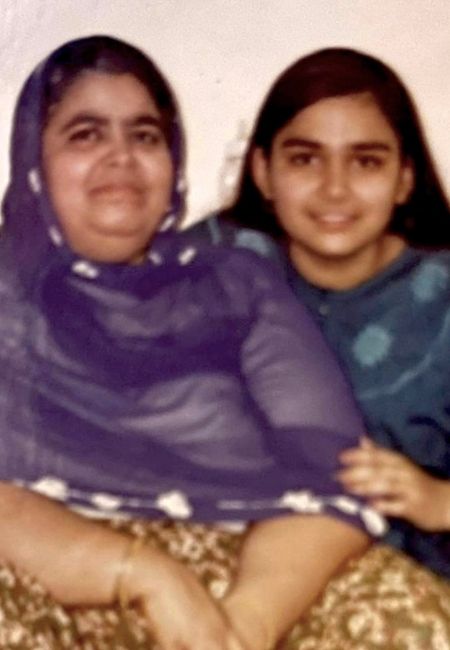
The transition from Kuwait to India in the early 1990s was a significant change for Dr. Mubarika M. Kheda. Although she had spent her formative years in Kuwait, her return to India during the Iraq War in 1991 brought a major cultural shock. Yet, her naturally joyful attitude allowed her to accept the situation without complaints. The challenges she faced during this phase played an important role in shaping the resilient and determined woman she would eventually become.
Dr. Mubarika lived in Kuwait for several years and had grown accustomed to the lifestyle — a clean environment, easy access to daily needs, and high levels of hygiene. She also adapted to the racial attitudes and behaviour of locals, accepting them as part of life. She always enjoyed being loved and never viewed challenges as unbearable burdens. “I am a person who likes to be a horse in the race, not to win, but to keep running because the journey is long. Once I reach a level of perfection, I still do not stop learning,” she says.
During this time, her sister’s marriage went through significant difficulties. Her brother-in-law, Abbas, was battling cancer. Her sister had twin daughters and no financial support of her own. Meanwhile, Dr. Mubarika’s elder brother had moved away to pursue medical studies. This left her father to shoulder the responsibility of supporting his elder daughter’s family along with his own, managing all financial burdens alone. With nine individuals depending on him, the weight was immense.
As a teenager, Dr. Mubarika could clearly see her family’s financial struggles. She understood that she had to be a child with minimal demands—someone who contributed emotionally rather than adding to the burden. This early awareness taught her maturity, empathy, and responsibility far beyond her age.
Dr. Mubarika recalls, “The reality was hard to reconcile with the fantasy world children see today.” At thirteen, she began to build her own understanding of life, shaped by the differences in how people lived, the disparity in economic conditions, and the stark contrast in lifestyle.
“Life’s bricks are cemented by Allah (SWT) and His angels — Alhamdulillah Shukranillah. But the pillars are the people who stand with you as strength, the ones who will never let you collapse — Mashallah. And the ceiling is the faith you place in both, for it builds the home of success — Subhanallah.”
PHASE 3: Embracing Unforeseen Paths
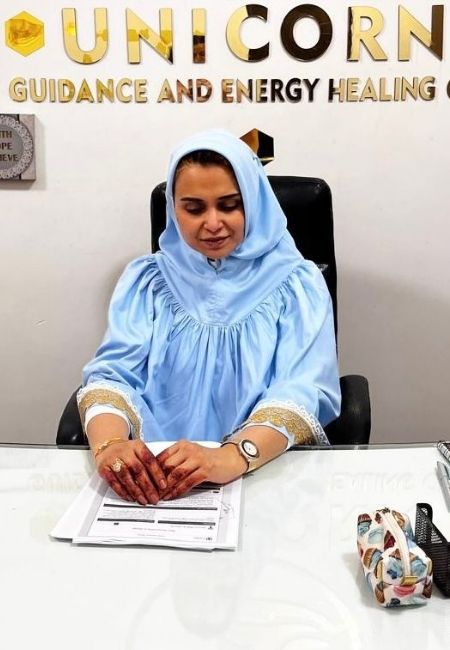
Dr. Mubarika’s academic struggles were accompanied by a series of personal challenges. The pressure to succeed, along with the emotional strain of trying to fit in and prove herself, became overwhelming. As the Class 10 CBSE Board Exams approached, expectations grew heavier—both from herself and those around her—affecting her emotional well-being. “I wondered if I would ever catch up, but I stayed positive and knew how to keep up with everything. I felt relaxed when I prayed, and my inner voice said, ‘It’s hard, but you will do it.’ That brought confidence back into me,” she says.
Despite every hurdle, her determination remained unshaken. She worked tirelessly to improve her grades, spending hours reading, writing, and practicing. Her dedication paid off—she began scoring well in her pre-boards, and by the time the final results were declared, she had earned a merit position in History. It was a moment of deep personal victory. “It wasn’t easy, but I was proud of what I had accomplished. I pushed myself beyond my limits, and it felt like I had won my own personal battle,” she recalls.
This period brought a major shift in her understanding of life. Though she had always valued academics, she now realized that success was not defined solely by marks. Around the same time, her brother Ali returned to India to complete his senior secondary studies and pursue engineering—a decision that required significant financial commitment from her father, who was also supporting her elder sister’s family. Seeing this, Dr. Mubarika felt it would be unfair to demand expensive higher education for herself.
Gradually, she understood that personal growth, emotional strength, and adaptability were just as important as academic achievements—perhaps even more. “I realized that the most important lessons in life aren’t always found in textbooks. They’re found in the struggles we face, the relationships we build, and how we handle the challenges that come our way,” she reflects.
Note of Thanks
I would like to express my heartfelt gratitude to the many who have supported me in the walk of life. First and foremost, Allah SWT and Panjatan Paak “Ala Salatus Sallallahu Alaihi Wasallam”, my teacher Hatim ibn Ibrahim al-Hamidi, my spiritual parents and teachers. My Aqa Mola, His Highness Dr. Mufaddal Saifuddin (TUS) — your wisdom and guidance have been my anchor. I owe a deep sense of gratitude to all. My parents, Fakhruddin and Asma Bai, whose upbringing, love, and encouragement laid the foundation for my personal and professional success.
To my dear husband, who has always stood by me with strong authority and supported me with understanding — thank you for being my honest critic. Sakina, my beloved daughter, has been my greatest source of inspiration. Watching you grow into a compassionate, strong young woman has been the most rewarding part of my life. Your strength and grace motivate me every day to continue this work.
I am immensely grateful to all my mentors, especially Ms. Ashita Saxena, for coming into my life as an angel and guiding me along my journey of healing. I am thankful to my beautiful friends Nazima and Raavi for always showing up and trusting me. Girls, your presence in my life is always cherished. My colleague and dear friend Shifa, thank you for your support and love. A vote of thanks to my Toastmaster buddy, Sonia Keswani, who brings applause to my every day.
I extend my gratitude to my siblings for giving me a positive thrust in life. To all my relatives who shared their blessings, especially my cousin Fatima Abbas Kheda and her family — you have all played a significant role in my journey, and I carry your lessons with me every day. “My people are angels from Allah SWT.”
A word of thanks to all the clients, students, and fellow healers who have crossed my path. Your trust and faith in my work have been a source of constant motivation. It is an honor to have been part of your healing journeys. Your courage to embrace change and growth inspires me continuously.
Lastly, my deepest gratitude goes to every institution I have worked with and everyone who has showered me with their wisdom and knowledge. This book is not just about me; it is about all of us — our shared experiences, struggles, and triumphs. I hope it serves as a reminder that healing is possible and that change is always within reach.
Thanks
Dr. Mubarika M. Kheda