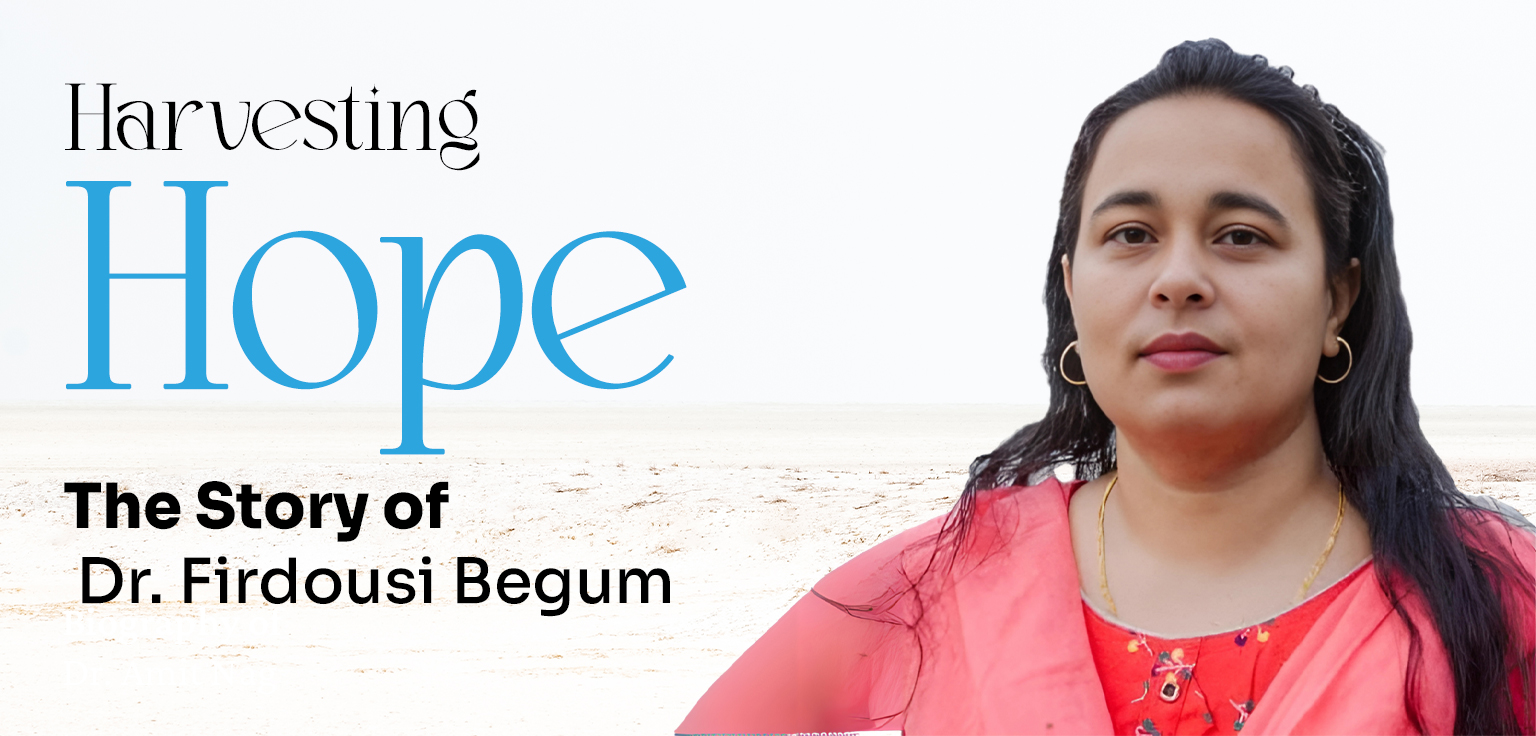
“Greatness lies not in the spotlight we receive, but in the light, we bring into the lives of others.”
Introduction
Every life holds a story worth telling, but some lives shine with a rare and gentle light, quietly leaving a mark that is both deep and enduring. The life of Dr. Firdousi Begum belongs to this rare kind. Her journey is not one of grandeur or glittering accolades, but of resilience, humility, and service. It is a life that shows us how strength comes not only from personal ambition, but also from the ability to lift those around us, to honor one’s roots, and to find meaning in the ordinary acts of compassion and perseverance.
Dr. Firdousi Begum was born on the 15th of November 1977 in Raniganj, Assam. She was the daughter of Late Anowar Hussain, a Sub-Divisional Officer in the electrical department whose work ethic and discipline left an indelible impression on her, and of Pushida Begum, a gentle homemaker whose nurturing spirit shaped her daughter’s character. Childhood for Firdousi was marked by sincerity, punctuality, humility, and politeness. Teachers, friends, and family members alike saw in her a child who carried within her a quiet determination—never boastful, always steady, and deeply rooted in respect for others.
She grew up in a large family filled with accomplished siblings, where vision and service were a way of life. Her elder brother’s remarkable career as an Indian Forest Service officer became a source of tremendous inspiration, while others in the family went on to careers in civil services, medicine, agriculture, pharmacy, forestry, and academics. The examples around her served as constant reminders of the importance of responsibility, education, and dedication. It was an environment that taught her early on that success is not measured by wealth or status alone, but by one’s willingness to serve society and contribute meaningfully.
Her education reflected this sense of purpose more than the pursuit of distinction. She began her schooling in Raniganj at the local primary school, later moving to the Shonaluguri Madrasa, and then to Raniganj Higher Secondary School. Her results were consistent, often earning her steady second-division marks. In a world that tends to glorify only exceptional results, her journey is proof that education is not merely about brilliance—it is about consistency, determination, and the faith that knowledge shapes character. She went on to study Economics at Bholanath College in Dhubri, a field that would later weave seamlessly into her contributions to rural development and farming communities. With her degree in hand, she enrolled at Gauhati University for her master’s, but life’s path led her in a different direction as marriage approached.
In May 2001, on International Labour Day, she married Safior Rahman, a devoted and passionate professional working in the field of horticulture and farmer development. Marriage for her was not the end of a dream, but the beginning of a shared journey of responsibility and purpose. While she initially set aside her full-time academic pursuits as she adjusted to a homemaker’s role, she never abandoned the dream of completing her higher studies. Balancing the demands of family life and social responsibilities, she later resumed her education through Indira Gandhi National Open University and successfully completed her master’s degree in Economics in 2011. That moment was not just an academic achievement, but a quiet victory of perseverance—a reminder to countless women that it is never too late to continue one’s learning.
“The strongest roots grow not in comfort, but in values.”
PHASE 1: The Silent Beginnings of Greatness
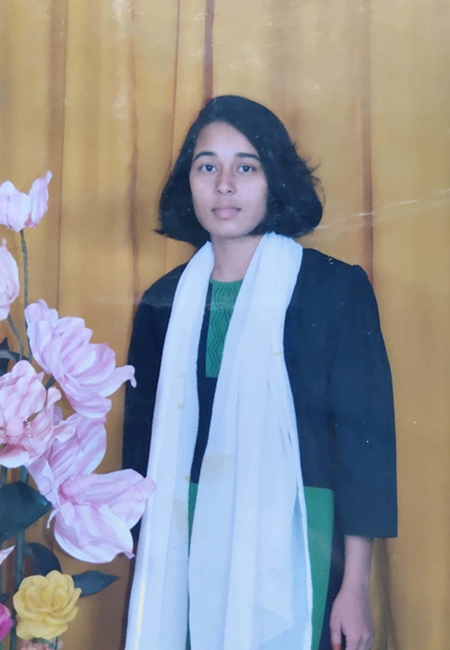
Every story of strength begins somewhere quietly, in places where values and character are sown long before achievement ever blooms. For Dr. Firdousi Begum, that beginning took root on 15th November 1977, when she was born in Raniganj, Assam, into a family whose legacy made her life both secure and demanding. Born the daughter of Late Anowar Hussain and Pushida Begum, she inherited two seemingly opposite yet complementary worlds: the discipline of her father and the tenderness of her mother.
Her father, Anowar Hussain, was a Sub-Divisional Officer in the electrical department, a man of respect, responsibility, and integrity who held society’s trust through his service. For him, work was not merely duty—it was a reflection of who he was. Colleagues and community members often described him as a man of sharp intellect, but what struck his children most was the combination of dignity and humility with which he lived his life. His work ethic shaped the environment of the household, creating an atmosphere where discipline intertwined effortlessly with love.
Her mother, Pushida Begum, stood at the heart of the family as a devoted homemaker. While her father’s world took him to offices and public responsibilities, it was her mother’s nurturing presence at home that grounded Dr. Begum from her earliest years. Gentle yet firm, soft-spoken yet determined, her mother became the first teacher of values like kindness, patience, and responsibility. For every child in the household, she embodied the spirit of selflessness that forms the cornerstone of strong families.
Together, they provided an environment where education and morality were inseparable. From her father, she observed discipline and focus; from her mother, she absorbed humility, compassion, and the quiet art of resilience. It was in this environment that little Firdousi learned the lessons that would guide her life: that respect is earned through consistency, that service begins at home but must extend outward, and that sincerity is a silent but powerful force that carries people far.
“Education is not about how fast we travel, but how steadfastly we keep moving forward.”
PHASE 2: A Steady Path to Knowledge
Education is more than classrooms, books, and exams. It is the shaping of a mind, the nurturing of a purpose, and the sharpening of values that sustain a lifetime. For Dr. Firdousi Begum, her educational journey was never linear, nor was it marked with the perfection of top distinctions. Instead, it was steady, consistent, and deeply resilient—a reflection of her spirit. It was a journey that proved that true education is not about being first in class but about finding the strength to continue, the courage to resume, and the determination to never give up.
Born in the modest surroundings of Raniganj, Assam, her childhood was filled with the whispers of her mother’s encouragement and the watchful discipline of her father. These values carried her through when she first set foot in the world of formal education at Lower Primary School, Shonalugi, in Raniganj. She was only a child then, yet even in her small stature she carried herself with the composure of someone who understood that education was not just for herself but a pathway to honor her family’s values.
From Class 1 to Class 4, she studied in this modest school, walking the dusty roads with her books pressed close to her chest, her eyes open with curiosity. Teachers often noted that415044150968464150she was neither the loudest nor the most gifted student in class; instead, she was the one who was always regular, who always came prepared, who turned in work done meticulously and quietly. Her handwriting, neat and composed, reflected the tidiness of her mind. And while many children her age often let small distractions sway them, young Firdousi displayed a remarkable steadiness of attention for her years.
After passing her primary classes, she took admission into Shonaluguri ME Madrasa, where she studied from Class 5 to 7. This was a period when life was not without its struggles. Growing up in a large family meant that time, resources, and attention were often spread thin. Yet, she never allowed these challenges to deter her.
“Marriage is not about finding completion in another, but about becoming completeness together.”
PHASE 3: The Power of Shared Journeys
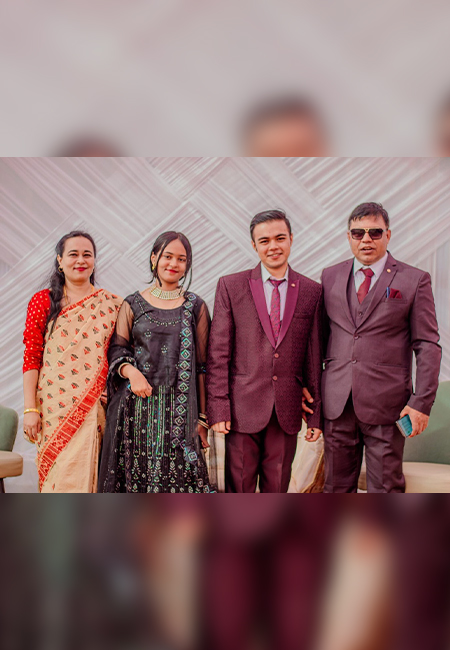
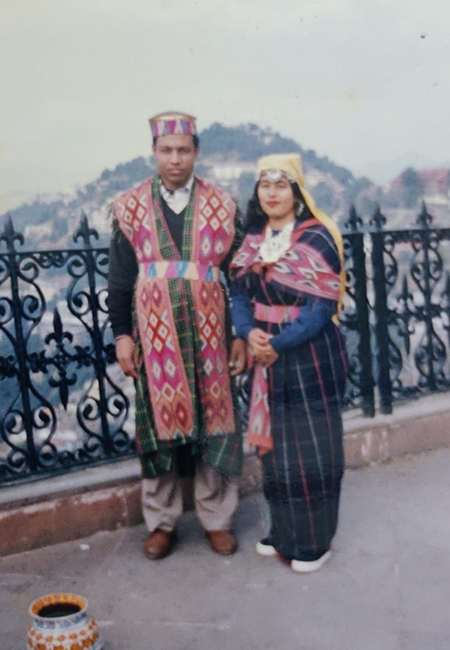
On the 1st of May, 2001, as the world commemorated International Labour Day, a different kind of labor of love and responsibility was sealed in Raniganj. That day marked the union of Dr. Firdousi Begum with Safior Rahman, a partnership destined not only to shape two individual lives but to create a shared mission of family strength, service, and collaboration. The choice of date was symbolic in ways perhaps unrecognized then; while the world acknowledged the dignity of labor, Firdousi stepped into the sacred labor of love, family, and partnership—roles that demand as much perseverance and wisdom as any professional calling.
Marriage, for many, is often seen as a shift in identity, a redirection of priorities. For Firdousi, it was not about changing who she was but about expanding into multiple roles with grace. Stepping from the structured world of education into the unpredictable world of married life came with challenges of its own. Yet, just as she had approached school and studies with humility and steadiness, she approached marriage with the same sincerity of spirit.
Her husband, Safior Rahman, was deeply involved in horticulture and community development in Arunachal Pradesh—an area far removed from the bustling centers of Assam where she had grown up. Entering his world required adaptability, a new sense of belonging, and courage. But instead of letting the distance or differences overwhelm her, she embraced his journey as her own. From the very beginning, she recognized that her marriage was not just a personal relationship, but a partnership defined by shared service, sacrifice, and vision.
As a homemaker, she took on one of the most demanding yet often undervalued roles in society. To manage a household is to become the backbone of stability without glory, to nurture in silence, and to build an invisible scaffolding upon which every other achievement stands. Yet Firdousi treated her role not as secondary, but as foundational. In caring for her home, supporting her husband, and raising her children, she was also shaping the environment that made every professional and social contribution of her family possible.
Note of Thanks
This biography is not just a record of the life of Dr. Firdousi Begum but a celebration of a journey of perseverance, service, and quiet transformation. As such, it is important to acknowledge with deep gratitude all those whose support, encouragement, and contributions made this telling possible.
First and foremost, my heartfelt thanks go to Dr. Firdousi Begum herself. Her openness, patience, and sincere sharing of her life’s experiences have been the greatest gifts in bringing this biography to life. Her humility and dedication, not only to her family but to the wider community she has served, poured through every conversation and reflection, turning facts into a moving narrative. The courage it takes to reflect on one’s life with honesty is rare, and Dr. Begum did so with grace and generosity. She allowed this work to capture not only her achievements but also the values and motivations that have shaped her path.
Special appreciation is due to her husband, Safior Rahman, whose partnership in life and work has been a cornerstone of this story. His support for her roles, both within the family and in the field, has nurtured an extraordinary balance of home and service. Together, their shared commitment to uplifting farmers and rural communities provides a powerful example of partnership in purpose. I extend gratitude to their children as well, whose respect for education and tradition holds the promise of continuation for the values their parents embody.
I also wish to thank the numerous members of the farming communities, tribal families, and cooperative organizations across Arunachal Pradesh who welcomed us with openness and trust. Their stories, struggles, and triumphs have brought depth, authenticity, and hope to this biography. By sharing their experiences, they have enriched the narrative beyond individual achievement, showing how collective growth comes from shared learning and cooperation.
Gratitude extends to the educators, colleagues, and friends who supported Dr. Begum throughout her educational and professional journey. The early teachers who nurtured her sincerity and humility, the colleagues at Roopland Public School who walked alongside her during her teaching career, and the social workers and agricultural experts who collaborated with her in community development all contributed their knowledge, encouragement, and friendship. Their roles, whether seen or unseen, played a part in shaping her impact.
I would also like to acknowledge the efforts of the researchers, writers, and editors who meticulously gathered information, verified facts, and crafted the narrative with care and sensitivity. Their dedication to portraying Dr. Begum’s life in a respectful and inspiring manner was essential in creating this biography as a source of motivation for many.
Finally, I thank the readers, whose interest, empathy, and belief in stories of perseverance give this work its purpose. May the life of Dr. Firdousi Begum inspire individuals from all walks of life to embrace education, service, and resilience—values that transcend circumstance and cultural boundaries.
This biography is a tribute not only to one remarkable life but to the enduring power of education, partnership, and the unwavering spirit of service. To all those who contributed directly or indirectly, your support has been invaluable, and my deepest thanks are extended to each one of you.
Thanks
Dr. Firdousi Begum