“Most of the important things in the world have been accomplished by people who have kept on trying when there seemed to be no hope at all.”
Introduction
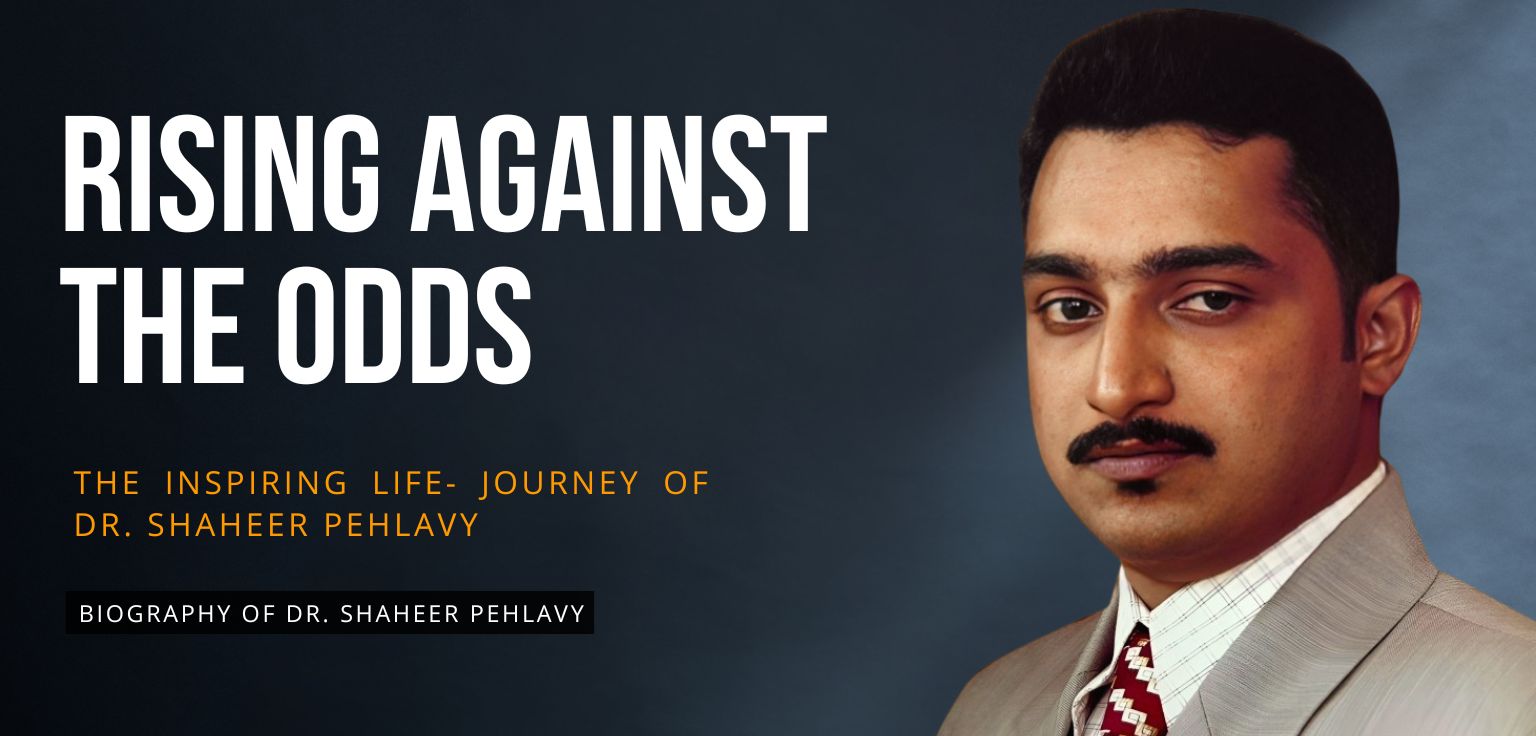
Each biography starts with a single thread—a person’s life—and then weaves it into a tapestry full of lessons learnt, hardships faced, victories achieved, and legacies. The values and visions that characterise true leadership are woven throughout Dr. Shaheer Pehlavy’s life, in addition to reflecting his own personal journey. There are no dates, occasions, or career turning points in his story. It is the tale of a person who saw obstacles as chances, who transformed constraints into breakthroughs, and who prioritised service and contribution over selfish interests.
Dr. Shaheer’s journey challenges the conventional narrative in today’s fast-paced world, where professional worth is frequently determined by financial success or academic credentials. With a background in business administration and commerce, he boldly entered fields that required technical know-how, where others might have been hesitant. Even experienced professionals found it difficult to handle the machines, technologies, and projects he worked on because he lacked a formal engineering background. His courage to innovate and his eagerness to learn were what set him apart.
His career crosses borders, industries, and cultures, from warehouse floors to global industrial sites, from irrigation tunnels in India to resource recycling facilities in Kuwait and suction excavator projects in Saudi Arabia. He faced opposition, challenges, and uncertainties at every turn, but he always managed to move on. His conviction that “where there is a will, there is a way” was a lived philosophy rather than a catchphrase.
All great journeys start with humble beginnings. Dr. Shaheer’s early years were influenced by discipline, fortitude, and familial influence rather than privilege. He learnt the value of education, leadership, and service from his older sister, a well-known Mangalore school principal. She taught him that success involves more than just personal growth; it also involves uplifting others and making a positive impact on society.
Beary, Tulu, Kannada, Konkani, Tamil, Malayalam, Marathi, Hindi, and English are among the languages he learnt while growing up in a multilingual environment. He was able to connect with people from different places and cultures thanks to his linguistic skills, which went beyond simple communication. Later on, this ability would come in very handy as he worked in a variety of international environments.
Dr. Shaheer’s refusal to be constrained by academic, cultural, or professional boundaries is the most remarkable feature of his life. Despite having degrees in commerce, he was drawn to the mechanical and industrial fields by his curiosity and perseverance.
He had to figure out how to recycle garnet abrasives used in sandblasting, a problem that had baffled many in Kuwait. He viewed waste as a chance for innovation rather than something that could not be avoided. He presented a way to recycle the material, reduce expenses, and encourage sustainability. His solution, which addressed both environmental responsibility and business efficiency, was not only technically sound but also innovative.
“There is always one moment in childhood when the door opens and lets the future in.”
Phase 1: T he Childhood Journey of Dr. Shaheer Pehlavy
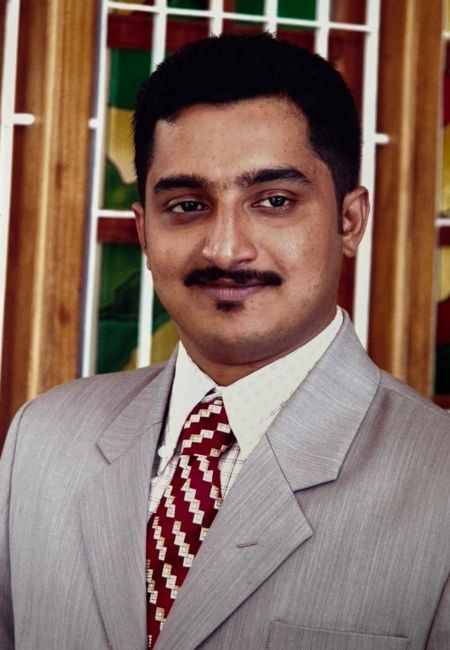
The story of Dr. Shaheer Pehlavy started in the town of Ujire, which is tucked away in the verdant embrace of Karnataka’s Western Ghats. The smell of fresh earth after monsoon rains gave the town its soul, the hills would be rolled over by morning mist and the agricultural land around would reverberate softly. Ujire was more than just a place of birth for a young boy who was only learning to hold a pencil and recite alphabets; it was the first canvas of memory.
Dr. Shaheer’s early years were spent in the corridors of Anugraha English Medium School, a modest establishment where students sang prayers before classes started and wore immaculately ironed uniforms. Back then, he was just another boy, full of curiosity, ready to play, and gradually learning about the world outside his home. His father, a man who stood for stability and strength, was a silent reassurance in his life.
However, fate, which is frequently cruel, decided to put him to the test too soon. Dr. Shaheer’s father died when he was in the second standard. For the majority of kids that age, death is a vague concept and a word that is spoken in low voices. For Dr. Shaheer, however, it was a sudden upheaval—the loss of a person who had played a pivotal role in his life, the first powerful and influential real mentor. Later on, he would remember how the house became quieter, how family conversations carried an unsaid weight, and how his mother’s eyes seemed to simultaneously hold resiliency and worry.
Life could no longer be the same without his father. His mother decided to return to her hometown Mulky. Dr. Shaheer experienced yet another form of loss as he left behind the comforts of Ujire, friends, and streets he knew. At a very young age, he was forced to live in a hostel due to circumstances. The hostel was far from home, but it wasn’t cruel but like an uneasy truce. His new friends were the sound of ringing bells, the smell of boiled rice in the mess hall, rows of iron cots, and cleanly folded bedding.
“Life is about accepting the challenges along the way, choosing to keep moving forward, and savoring the journey.”
Phase 2: Professional Difficulties and Experiences
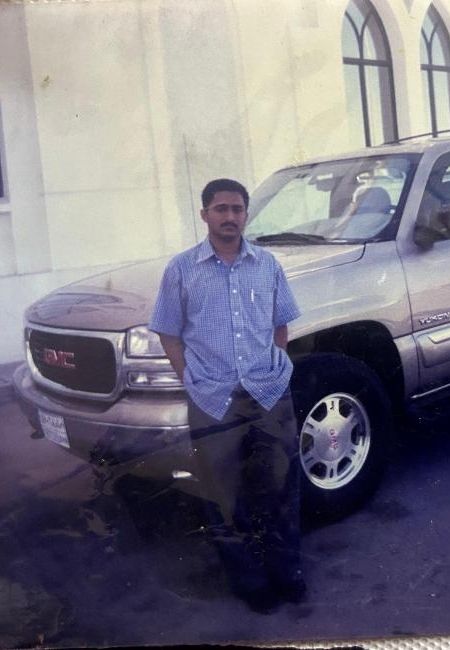
Dr. Shaheer Pehlavy’s career path has been as exciting and demanding as his life-changing upbringing. He returned to India and assumed a key position with Premier Civil Contracts Private Limited in Maharashtra after completing his schooling and early work experiences, both domestically and overseas. Working on subterranean tunnelling projects for dam and hydroelectric infrastructures presented him with one of the most technically challenging periods of his career.
Most people think of a tunnel as just an underground passageway; however, the tunnels were enormous, transformative places of engineering precision and deadly danger for Dr. Pehlavy. “Before beginning inclined tunnels that ran beneath dam water, we were excavating wells that were 90 metres deep and 11 x 8 metres, in rectangular shapes,” he recalled. For comparison, residential wells are rarely deeper than 10 to 15 metres. However, these projects necessitated working in cages at depths of up to 90 metres while approximately 105 thousand million cubic feet of dam water loomed overhead, posing an unseen and silent threat that could not be disregarded.
The physical difficulties were enormous. Precise coordination, extreme caution, and a constant awareness of one’s surroundings were required for each work cycle. One mistake could have disastrous results. He clarified, “This was a daily adventure, but with life on the line.” Strict safety regulations were followed; turnbuckles, anti-revolving cages, and reinforced harness systems were commonplace. Nevertheless, the mental strain was evident despite these safeguards. Each tunnel descent served as a reminder that while engineering calculations could mitigate some risks, the unpredictabilities of nature could not. Dr. Pehlavy took a practical approach to his work in spite of the risk. He realised that risk is a natural part of life, whether one is sitting at home, walking down the street, or even drinking water. He remarked, “Life is always risky. Managing it, being conscious, and acting responsibly are the challenges.” His philosophy was straightforward: unlike the hidden uncertainties of daily life, the risk inherent in underground projects was visible, quantifiable, and therefore manageable.
“The only way to discover the limits of the possible is to go beyond them into the impossible.”
Phase 3: Engineering the Impossible: Innovation Beneath the Mountains
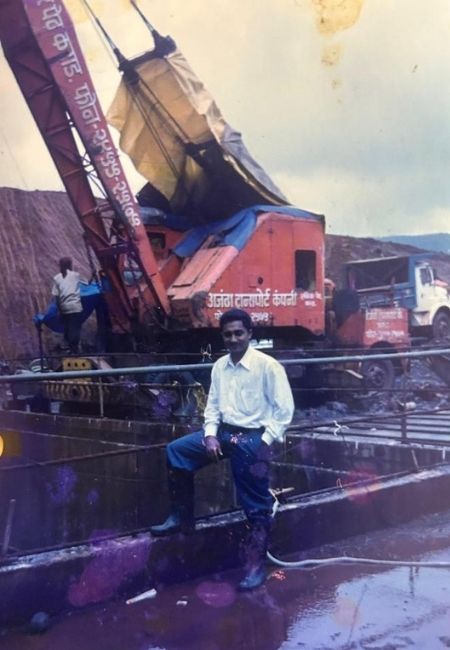
Dr. Shaheer Pehlavy’s career has always been characterised by obstacles that called for bravery, inventiveness, and unwavering resolve in addition to technical proficiency. His time in Maharashtra, where he took on a challenging and important assignment for an interstate irrigation project linking Maharashtra and Goa, was one of the most noteworthy periods of his career. Despite appearing straightforward on paper, the project would require exceptional creativity and exacting execution
The task was straightforward but difficult: water from Maharashtra had to be routed to Goa via rocky, wooded terrain that was dominated by hard rock formations. Because of the topography, the traditional approach of an open canal was considered unfeasible. Rather, a 520-metre-long tunnel through an impenetrable mountain had to be built. The livelihoods of local communities that relied on the land for their sustenance could be negatively impacted by any miscalculation or delay that could submerge entire villages. Small communities of Dinkars, families who lived in wooded areas and raised cattle, produced milk, and collected honey for sale, were among them. There were between forty and fifty huts that could be flooded. There was no room for failure; the regional water supply, property, and lives were on the line.
The project had previously been awarded to a different contractor through a government tender, but overwhelmed by the technical challenges, the contractor pulled out in the middle. Then, realising Dr. Pehlavy and his group’s reputation for effectiveness and problem-solving, the government turned to them. Despite the logistical and technical challenges, Dr. Pehlavy accepted the challenge after meeting with officials, including the late former Chief Minister Mr. Vilasrao Deshmukh. The official schedule called for nine months to complete the project, but due to environmental restrictions, work could only be done for three or four months out of the year when water levels could be regulated, and this limited time frame necessitated careful planning.
Note of Thanks
Without the tremendous support, encouragement, and goodwill that Dr. Shaheer Pehlavy received throughout his life, the process of writing this biography would not have been feasible. He thanks everyone who shared his story, including friends, mentors, employers, and colleagues. He expresses his sincere gratitude to numerous organisations and directors who have given him responsibility, supported his innovations, and acknowledged his contributions. He was able to learn, grow, and explore in areas well beyond the scope of his formal education because of their faith. Their assistance enabled him to turn obstacles into opportunities and achieve his accomplishments.
He also warmly thanks the innumerable employees, engineers, and staff that he shared factories, offices, workshops, and tunnels with; in addition to successful projects, their collaboration and trust created enduring friendships and relationships.
Above all, he is thankful to his family, who continued to be the source of his strength in spite of the difficulties he faced as a child. The unsaid sacrifices of those who supported him are a part of every professional advancement, accomplishment, and milestone. He expresses his love and gratitude towards his loving wife, who has been a constant support and has helped him grow in a multiple number of ways.
This thank-you note is only a tiny part of a much greater debt of gratitude that cannot be paid back with words alone. Dr. Shaheer Pehlavy will always be grateful to everyone who had an impact on his life and enhanced his path.
Thanks
Dr. Shaheer Pehlavy