“Reach high, for stars lie hidden in you. Dream deep, for every dream precedes the goal.”
Dedication
I am thankful to Nishi Garg for her effort in crafting this concise biography. This book will be relevant for anyone keen to understand the mist-covered enigmatic Northeast India. While Nishi aimed to focus on me, the narrative inevitably reflects the broader stories of Tripura and the Northeast. It underscores how, despite the region’s marginalization and challenges, dreams can still be pursued. The individual takes a backseat; what matters is their contribution to societal progress. Through this biography, Nishi has achieved precisely that.
This book is further devoted with my deepest love and gratitude to my parents, Salil Devbarman & Sabita Devbarman, whose courage and determination laid the foundation of my life. To my father, whose resilience and quiet strength guided me with lessons of perseverance and integrity, and to my mother, whose nurturing wisdom and compassion remain a source of endless inspiration, I owe every step of progress and every value that defines me. Your sacrifices and unshakable belief in me have been the guiding light of my journey.
To my beloved wife, Kanak Lata Devbarman, whose devotion, patience, and unwavering encouragement have been my constant source of strength through both challenges and triumphs. Your companionship has been my greatest comfort and your wisdom has always steadied me through the complexities of life. Every achievement bears your presence, every path ahead is brighter because you have walked beside me with love and faith.
To my two daughters, Shinjini & Shayari, who continue to be the pride and joy of my life, thank you for being the light that refreshes my spirit and the hope that inspires me to strive for something greater each day. Watching you grow, nurturing your dreams, and learning from the freshness of your perspective remain among my most cherished blessings.
To my extended family, close friends, and trusted mentors, whose support, care, and encouragement have stood by me at each critical turn. Your kindness and your faith in my abilities have been invaluable in the moments of trial as well as during the moments of celebration.
This dedication would remain incomplete without acknowledging the recognition, encouragement, and opportunities I have received from organizations, institutions, dignitaries, and cultural communities across different parts of the world. Your trust has not only expanded my journey but also given me courage to serve with greater devotion.
Lastly, to every single individual whose life has momentarily crossed with mine, whether through literature, service, travel, or the simple exchange of words, I remain grateful. Each interaction has enriched my awareness, expanded my vision, and left an imprint upon my heart. This book is just as much a celebration of your warmth and generosity as it is a reflection of my own path.
Dr. Sankha Subhra Devbarman
“If you want to serve your country, you must first serve your village.”
Phase 1: The Inherited Determination
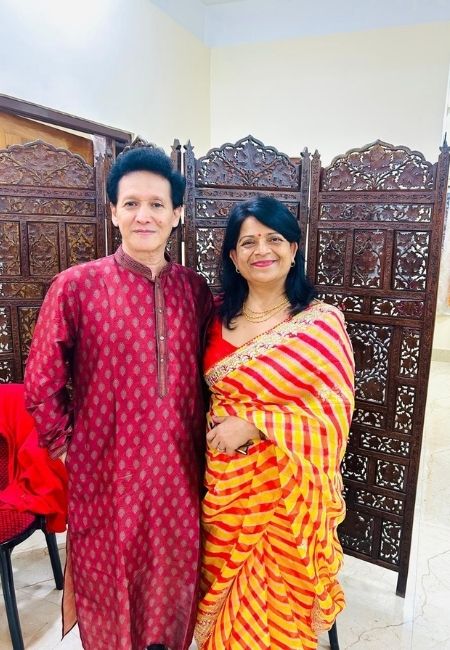
Dr. Sankha Subhra Devbarman was born on 2ndApril, 1962, into a family which is closely related to Tripura’s royal ancestry , an ancient lineage that shaped the history and culture of the northeastern region of India. His birth carried within it the silent pride of heritage, yet the life that unfolded for him was not one of comfort or grandeur. He is indeed the great great grandson of Queen Manmohini Devi (Wife of King Birchandra Manikya). Despite the regal legacy, his childhood was built on modest circumstances, nurtured in surroundings where dignity was drawn not from luxury but from resilience and simplicity. What could have been a childhood of indulgence was instead a journey through hardship and humility, and this contrast between heritage and reality left a profound influence on his developing mind.
In 1947, the country gained independence. Like other princely states, Tripura also merged with India in 1949. The monarchy was replaced by a republic. Changes occurred in the socio-economic system. A new economic system was established, leading to many transformations. Dr. Sankha shubhra Devbarman’s family was not spared from these changes either. The joint family had broken apart. The property was divided. All these developments had a negative economic impact on the family’s comfort and well-being. Both his father and his mother had to begin their life almost from nothing, even while carrying the weight and prestige of a glorius aristocratic past. His parents became symbols of perseverance and courage. Through their hard work and unyielding determination they rebuilt a life, step by step, that was defined not by inherited wealth but by the values of grit and self-belief. To Dr. Sankha Subhra Devbarman, they were living examples of how true dignity comes from honesty of effort rather than from titles or positions. They became the first idols in his life, figures whose wisdom and sacrifices shaped his personality more profoundly than any symbol of royalty ever could.
“The price of greatness is responsibility.”
Phase 2: Scholarly Pursuits
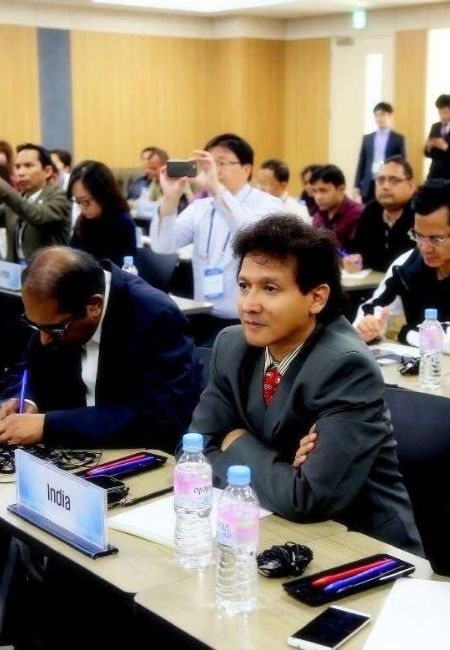
When the time came for higher learning, Dr. Sankha Subhra Devbarman embarked on a journey that would broaden his horizons far beyond the boundaries of his immediate environment. The young man, filled with intellectual curiosity, left home to pursue formal studies in the metropolis of Kolkata. In 1983, he graduated from the University of Calcutta with a Bachelor of Arts degree with Honours in Political Science. The years at this historic institution were significant not only because of lessons gained in classrooms but also because they introduced him to the spirited academic environment of one of the oldest universities in South Asia. Here, for the first time, he stepped into debates that engaged with ideas of governance, constitutional reasoning, comparative politics, and policy structures.
His undergraduate exposure awakened a sharp appetite for international thought. This led him to pursue a Master’s degree in International Relations at Jadavpur University, where he graduated in 1985. The atmosphere at this university was charged with intellectual discussions on diplomacy, war and peace, theories of global politics, and the responsibilities of states within a shrinking world. For Dr. Sankha Subhra Devbarman, it meant moving from the study of domestic political movements to the dynamic and interwoven fabric of international cooperation and conflict. These two years enabled him to understand the global stage as a living network of competing interests and mutual responsibilities.
Eager for deeper engagement with research, he advanced further in 1988 by completing an M Phil in West Asian Studies from Jawaharlal Nehru University (JNU) in New Delhi. With its rigorous academic standards and vibrant campus culture with intense intellectual atmosphere, this institution opened yet another universe for him. Through its challenging curriculum and the dedication required of its scholars, he was able to specialize in exploring the complex political, cultural, and economic structures of West Asia. For him, this was not merely a scholarly interest.
"Selfless service and sacrifice are the highest duties of a patriot.”
Phase 3: Path of Professional Journey
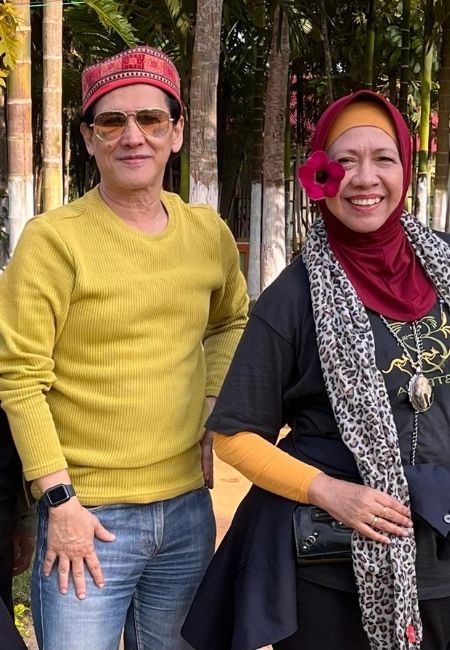
The completion of an impressive academic career opened for Dr. Sankha Subhra Devbarman the door to public service in the Ministry of Tourism. The Ministry of Tourism in the Government of India provided him with the opportunity to begin a long and dedicated professional journey. His career in the ministry started with his first posting in Chennai, a city rich in cultural history and economic activity. Though the responsibilities of his initial position were limited, it offered him the necessary grounding to understand how administration truly functioned within the framework of national governance.
During these early years, he carefully observed the mechanics of decision making. The job brought him into contact with tourism officials, state representatives, and citizens alike. Though the position did not grant him the authority of large-scale decision making, the experience proved indispensable. He learned how policies planned at central levels are implemented on the ground. He saw how the tourism sector combined culture, economy, and community participation. This phase solidified the conviction that national progress is built through collective participation rather than through top down policies alone.
His career advanced gradually until he was appointed Regional Director for North India. Holding this office required a steady hand as he was responsible for implementing tourism-related programmes in one of the most important regions of the country. The work demanded both administrative discipline and cultural sensitivity, as North India boasted historic sites, spiritual centres, and architectural treasures that attracted visitors from across the world. He developed innovative steps to encourage greater participation from private stakeholders and local communities. His efforts ensured that growth was not only measured in numbers of visitors but also in how tourism improved livelihoods and promoted cultural pride.
Note of Thanks
Writing the biography of Dr. Sankha Subhra Devbarman has been a profoundly enriching and inspiring experience. It is an honor to bring forth the life story of a man who has walked with humility, creativity, and dedication through every stage of his journey. Telling his story has not only been a privilege but also a reminder of how perseverance, compassion, and discipline can create a legacy that extends far beyond individual accomplishments. This is yet another inspiring story where a boy from a small town rose to achieve international recognition in various fields of life. In this context, we see that he has not only represented our country multiple times officially at various international forums but for creative work also he has been featured in renowned publications like Times of India, Filmfare, and Femina. His cover story has even appeared in magazines like The Week!
I am deeply grateful to Dr. Sankha Subhra Devbarman for trusting me with the responsibility of presenting his remarkable journey, from his earliest years of modest beginnings to his distinguished service in the Government of India, his celebrated literary career, and his continuing contribution as a humanitarian and cultural ambassador. His life demonstrates that true greatness lies not in titles or recognition but in sincerity of purpose and service to others.
This story would be incomplete without acknowledging his family, who remain the cornerstone of his personal world. The values imparted by his parents instilled in him patience, resilience, and compassion, qualities that shaped him into the person he is today. The unwavering support of his wife and the inspiration he finds in his daughters form the heart of his personal strength. It is through their love and guidance that he has been able to pursue every endeavor with conviction and balance.
I also extend heartfelt appreciation to the many mentors, colleagues, and companions who stood beside him throughout his academic journey, public service, literary pursuit, and social initiatives. Their encouragement, belief, and collaboration nurtured his growth during challenging times and reinforced his determination to serve with dignity and commitment. Their presence in his life reflects the power of shared values and collective strength in shaping success.
A special word of gratitude is due to the numerous institutions, cultural bodies, and organizations that recognized his abilities and gave him platforms to contribute. From classrooms to international forums, each opportunity enriched his outlook and deepened the impact of his work. These experiences did more than elevate his profile, they allowed him to contribute meaningfully to cultural exchange, education, and community development in ways that continue to resonate.
I am equally thankful to the individuals whose insights, reflections, and memories brought depth to this narrative. Their voices highlight the respect and admiration he commands across disciplines and regions. Their testimonies serve as living proof of the trust he has earned through his integrity, humility, and dedication.
Finally, to you, the reader, I offer sincere gratitude. This biography is not simply the story of one man but also a mirror of values that can guide us all. The journey of Dr. Sankha Subhra Devbarman is a celebration of cultural pride, academic excellence, social responsibility, and personal virtue. May his life inspire you to embrace humility, to cultivate patience, to value heritage, and to dedicate yourself to serving with compassion and sincerity. His legacy reminds us that the truest measure of success lies not in what we gain for ourselves but in what we are able to give to others.
Thanks
Nishi Garg